
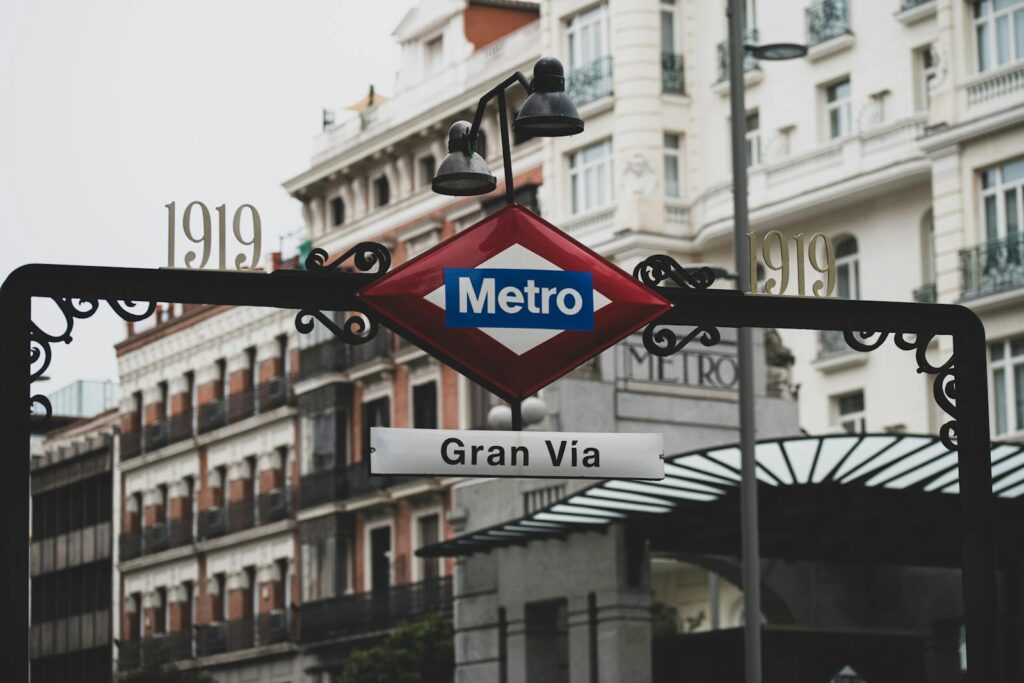


Spain’s public transport will probably save you hundreds of pounds a month. A monthly travel pass in Madrid costs €32.70 — that’s about £28, compared to £171.70 for a Zone 1-2 Travelcard in London. Barcelona is even cheaper at €22.80. And from January 2026, a new nationwide pass covers all commuter trains and regional buses for just €60 a month.
But before you picture a flawless system of gleaming trains running like clockwork — let’s be honest. Barcelona’s commuter rail network ended 2025 with 50% punctuality. Renfe’s low-cost AVE service on the Madrid-Barcelona route has been suspended since September 2025. And depending on where you settle, you might discover that the nearest bus stop is a 30-minute walk through an urbanisation with no pavement.
This guide covers what actually matters when you live in Spain, not visit. Costs, cards, apps, cities, problems — and how it all compares to what you’re used to back home. If you’re planning your move, our complete guide to settling in Spain covers the bigger picture.
The Price Shock (In a Good Way)
The single biggest difference between British and Spanish public transport is cost. Not a small difference — a dramatic one.
| What you pay | London | Madrid | Barcelona | You save |
|---|---|---|---|---|
| Monthly pass | £171.70 | €32.70 (~£28) | €22.80 (~£20) | 81–89% |
| Single metro ride | £3.60 (peak) | €0.73 (10-trip) | €1.30 (10-trip) | 64–80% |
| Bus single | £1.75 | Included in pass | Included in pass | 100% |
| Annual train discount | £35 (Railcard, 1/3 off) | €6 (Tarjeta Dorada, up to 40% off) | — | 83% |
| Petrol per litre | ~158p | ~131p equiv. | ~131p equiv. | 17% |
These aren’t promotional prices. The Spanish government has been subsidising public transport since 2022 — and the discounts have been extended through all of 2026. In Madrid, the 40% discount on the Abono Transporte is confirmed through December 2026. In Barcelona, the 50% discount on the T-Usual monthly pass continues under Royal Decree-Law 17/2025.
The New Abono Unico (January 2026)
The biggest change in Spanish transport this decade: a single €60/month pass that covers Cercanías commuter trains, regional (Media Distancia) trains, and state-run intercity buses across the entire country. For under-26s, it’s €30/month.
What it does NOT cover: metro, city buses, AVE high-speed trains, or private operators. Think of it as a national rail pass for everything except the fast trains and city systems.
For context: a similar pass covering National Rail commuter routes into London would cost you well over £300 a month.
Youth and Senior Discounts
Spain is remarkably generous with age-based discounts:
- Under 14: Free in Madrid (from July 2025) and Málaga
- Ages 15-25 in Madrid: €10/month for ALL zones — metro, bus, Cercanías, everything
- Under 26 nationwide: €30/month Abono Único (half price)
- Over 65 in Madrid: Free
- Over 60 nationwide: Tarjeta Dorada for €6/year — 25-40% off all Renfe trains
Compare that to the UK, where a 16-25 Railcard costs £35 and gives you a third off. The Madrid youth pass at €10/month is essentially free transport by British standards.
City by City: Where the Transport Is Actually Good
Not all Spanish cities are equal. Here’s what to expect in the places British expats actually move to.
Madrid — Best Public Transport in Spain
Madrid has the most complete transport network in the country. The metro alone has 13 lines, 302 stations, and runs from roughly 06:00 to 01:30. It’s clean, well-signposted, and air-conditioned on newer lines (though the older sections of Lines 1 and 6 can feel like a sauna in August).
The Cercanías commuter trains are frequent — every 5 to 20 minutes at peak — and cover a huge area around the city. That said, Madrid’s Cercanías had its worst year on record in 2025, with 1,521 reported incidents — averaging four per day. Lines C-4, C-8, and C-5 were the most affected. It’s better than Barcelona’s Rodalies, but don’t expect Swiss precision.
EMT buses fill the gaps with over 200 routes, and they accept contactless payment on board.
What might surprise you: Madrid’s night bus network (Búho) runs 32 routes every single night, not just weekends. Most routes pass through the Cibeles hub in the centre, with a few departing from Alonso Martínez and Moncloa. Compare that to London’s Night Tube, which only operates on Friday and Saturday nights on five lines.
BiciMad, the city’s electric bike-share scheme, has 7,782 bikes across 634 stations. A flat-rate subscription costs €10/month — all trips under 30 minutes are free.
The catches: The airport metro supplement is €3 (waived if you have the monthly Abono). Older metro lines lack air conditioning. And rush hour on Lines 1, 6, and 10 is genuinely packed.
If you’re considering Madrid as your base, the Digital Nomad Visa is one of the most popular routes for British remote workers — and the city’s transport makes working from different barrios effortless.
Barcelona — Great Metro, Terrible Commuter Rail

Barcelona’s metro is modern and efficient, with automated driverless lines (L9 and L10) that feel genuinely futuristic. The TMB bus network is solid, and the T-mobilitat card now works via Apple Wallet — something Madrid is still catching up on.
But the commuter rail system — called Rodalies here, not Cercanías — is a different story entirely. In 2025, Rodalies de Catalunya recorded just 50% average punctuality, the worst of any commuter rail network in Spain. In July 2025, it dropped to 41.7%. Between 37% and 53% of delays were directly attributed to Renfe; the rest came from ageing infrastructure, signal failures, and the occasional wildfire.
The other issue unique to Barcelona: Uber and Cabify are on their way out. A new Catalan law — which passed its first parliamentary stage in March 2026 with support from five parties — will restrict ride-hailing vehicles (VTCs) to intercity trips with a minimum two-hour advance booking. Around 600 urban VTC licences are set to be eliminated. If the law passes in full, taxis will be essentially your only option for on-demand rides within the city by late 2026.
Bicing, Barcelona’s bike-share, costs €50 per year. The first 30 minutes on a mechanical bike are free; e-bikes cost €0.40 per 30 minutes.
Valencia — The Affordable Hidden Gem

Valencia rarely gets mentioned in transport discussions, but for many British expats, it offers the best balance of quality and cost.
The MetroValencia and EMT bus network cover the city well. The standout is the TuiN pay-as-you-go card: €0.80 per trip, with a monthly cap at €35 — after which all travel is free. The subsidised Bonobús gives you 10 bus trips for €4.25. MetroValencia multi-trip cards have a 40% discount through at least June 2026.
The city itself is compact and extraordinarily walkable. Many expats who settle in the centre find they barely use public transport at all — which is a perfectly valid strategy that saves even more money.
If you’re thinking about Valencia, transport costs are just one of the many advantages of living in Spain — though you should weigh them against the realities too.
Málaga and the Costa del Sol — Cheap Metro, Patchy Buses
Málaga city has one of the cheapest metro systems in Europe: €0.49 per trip with a Tarjeta Monedero (standard top-up card). Under-14s travel free. The city EMT buses are reasonable in the centre.
But the Costa del Sol is a different world. Outside Málaga city, public transport is patchy at best. Many British expats in Marbella, Fuengirola, Estepona, or Nerja discover that the regional Consorcio buses are infrequent and don’t serve many urbanisaciones at all. If you’re settling on the Costa del Sol, a car is not optional — it’s essential.
Rural Spain and Smaller Cities
This is the uncomfortable truth that tourist-oriented transport guides never mention: outside Spain’s major cities, public transport can be very limited.
The “España vaciada” (emptied Spain) phenomenon means many rural areas have bus services designed primarily around school runs — a morning bus into the nearest town and an afternoon bus back. There’s currently a shortage of around 4,000 bus drivers nationwide, which makes expanding service difficult.
If you’re dreaming of a stone cottage in Andalucía’s interior or a finca in the Alpujarras, budget for a car. The Non-Lucrative Visa applicants planning rural retirements should factor vehicle costs into their financial planning.
The intercity coach network, however, is excellent. ALSA and other operators run comfortable, air-conditioned services between cities at reasonable prices (typically €15-25 for most intercity routes). They’re often the most practical way to travel between smaller cities that aren’t on the AVE network.
Renfe: The Good, the Bad, and the Delayed
Renfe is Spain’s national rail operator, and your relationship with it will depend entirely on which services you use.
The Good

Spain’s AVE high-speed network is genuinely impressive. Madrid to Barcelona in 2 hours 30 minutes. Madrid to Seville in 2 hours 20 minutes. Madrid to Málaga in around 2 hours 30 minutes. Book in advance and you can get tickets from as low as €26-44 — comparable to UK advance fares, but for trains that actually reach 300 km/h.
Competition has arrived too. Iryo (owned by Italy’s Trenitalia) and Ouigo (French SNCF’s low-cost brand) both operate on major Spanish routes, pushing prices down. Madrid-Barcelona return tickets can sometimes be found for under €50 when operators are competing aggressively.
The Tarjeta Dorada for over-60s costs just €6 per year and gives 25-40% off all Renfe services. That’s €6 versus the UK’s £35 Senior Railcard — for a bigger discount.
The Bad
Not all Renfe services share the AVE’s reliability. The Cercanías commuter networks vary wildly by region. Madrid logged 1,521 incidents in 2025 — a 230% increase since 2019 — making it the worst year in the network’s history. Barcelona’s Rodalies, as mentioned, had the worst punctuality in Spain at just 50%.
Renfe’s low-cost AVE service, Avlo, was suspended on the Madrid-Barcelona route in September 2025 after structural cracks were discovered in the Talgo-built bogies. No restart date has been announced as of April 2026. The result: average ticket prices on that route rose 25-40%, and competitors Iryo and Ouigo raised their prices by around 20% in response.
The Renfe app has a 1.2 out of 5 rating on Trustpilot from over 4,500 reviews. Common complaints include payment crashes mid-transaction, tickets charged but never delivered, and phantom “no seats available” errors. Most experienced users buy tickets through the website instead, or use third-party platforms like Trainline or Omio.
Infrastructure problems are ongoing. Copper cable theft has caused multi-hour delays on several occasions in 2024-2025. And strikes, while less frequent than in France, do happen — sometimes with minimal advance notice.
The Compensation Scandal
Spain’s new Sustainable Mobility Law requires Renfe to pay compensation for delays: 50% of the ticket price for delays of 15-30 minutes, and 100% for delays over 30 minutes. The law took effect on 1 January 2026.
Renfe’s response? They refused to implement it, calling the provision “unconstitutional.” The Transport Ministry — which oversees Renfe — has reportedly sided with the company against its own legislation. As of April 2026, the situation remains unresolved.
For now, Renfe’s own punctuality commitment page outlines the compensation they actually offer, which is less generous than what the law mandates. If you experience a significant delay, file a claim anyway — and keep your ticket.
Getting Around Without Public Transport
Uber, Cabify, and Taxis
Spain’s ride-hailing landscape is nothing like the UK’s. Uber and Cabify operate as VTC (vehículo de turismo con conductor) services — they exist, but face heavy regulation and active hostility from the taxi industry.
Madrid: Uber and Cabify operate normally. Plenty of drivers, reasonable wait times.
Barcelona: A new Catalan law (first parliamentary stage passed March 2026) aims to restrict VTCs to intercity trips only. If passed in full, on-demand ride-hailing will effectively end in Barcelona by late 2026.
Valencia and Málaga: Cabify operates in both cities. Uber’s availability is inconsistent — fewer drivers and longer wait times than Madrid. Cabify or FreeNow are more reliable options here.
Taxis remain the reliable option everywhere. They’re metered, generally honest, and available at designated ranks or hailed on the street. The FreeNow app works well for booking taxis across Spanish cities.
BlaBlaCar — Hugely Popular
BlaBlaCar is far more mainstream in Spain than in the UK. Over 970,000 shared trips were completed during summer 2024 alone, connecting around 7,000 municipalities — roughly 87% of every town in Spain. For intercity travel, it’s often the cheapest option:
- Madrid to Barcelona: €20-30 by BlaBlaCar vs €60-100 by train
- Madrid to Valencia: €15-20 vs €30-50 by train
The app now also sells Renfe and Iryo train tickets, so you can compare carpool, bus, and train prices in one place.
Driving
You’ll need a car if you live on the Costa del Sol (outside Málaga city), in rural areas, or in suburbs not well served by metro or bus. The good news: petrol is roughly 17% cheaper than in the UK.
UK driving licence: Valid for six months after you establish residency in Spain. After that, you must exchange it through the DGT (Dirección General de Tráfico). The UK-Spain driving licence exchange agreement, in place since 2023, makes this straightforward — but you’ll need a DGT appointment, a medical certificate, and to pay the associated fees.
ITV (the Spanish MOT equivalent): New cars are exempt for the first four years. From years four to ten, it’s tested every two years. After ten years, it becomes annual.
E-Scooters: New Rules from 2026
Electric scooters are popular in every major Spanish city, but the rules changed significantly on 2 January 2026 under Law 5/2025:
- Mandatory insurance for all privately owned e-scooters
- Registration required (plate or QR code)
- Minimum coverage: €6.45 million for personal injury, €1.3 million for property damage
- Speed limit: 25 km/h, cycle lanes only, no pavements
Rental scooters (Lime, Tier, Dott) handle their own insurance. But if you buy your own, you’ll need a policy — expect around €100-150 per year.
Pedal-assist e-bikes (up to 250W, max 25 km/h assistance) are exempt from insurance and registration requirements.
Your First Week: Practical Setup
Which Apps Do You Need?
- Moovit — the best transit app for Spain. Real-time data, covers every city, alerts on delays.
- CityMapper — excellent UX, now covers nine Spanish cities including Madrid, Barcelona, Valencia, Seville, and Málaga.
- Google Maps — decent backup. Transit routing works but real-time bus data is less reliable than Moovit.
- Renfe — for booking long-distance trains (despite the UX complaints).
- BlaBlaCar — intercity ridesharing and train ticket comparison.
- FreeNow — for taxis across Spain.
Getting Your Transport Card
Each Spanish city has its own transport card — there is no national equivalent of the Oyster card.
Madrid (Tarjeta de Transporte Público): Apply online at tarjetatransportepublico.crtm.es or at a CRTM office. You’ll need your passport or NIE, a passport photo, and €4. The card arrives by post or can be collected in person. Load it with an Abono Transporte subscription (€32.70/month for Zona A).
Barcelona (T-mobilitat): Buy at any TMB ticket machine in a metro station. Load with T-Casual (10 trips, €13) or T-Usual (monthly, €22.80 for 1 zone). Also available as a digital card in Apple Wallet via the TMB app.
Valencia (Mobilis card): Available at metro station machines, kiosks, and tobacconists. Card cost: €2 (plastic) or €1 (cardboard). Load with SUMA-10 (10 trips) or set up TuiN pay-as-you-go.
Málaga (Tarjeta del Consorcio): Available at metro stations. €1.50 for the card. Load with credit for €0.49/trip metro rides.
The "Each City Is Different" Problem
This is one of the things that catches British newcomers off guard. In the UK, your contactless card or Oyster works on the Tube, buses, Overground, Elizabeth Line, DLR, and most National Rail in London. One card, one system.
In Spain, every major city has its own card, its own app, its own rules, and its own discount structure. Move from Madrid to Barcelona and you start again with a new card and a new system. The Abono Único (€60/month) covers Renfe trains nationwide, but NOT metro or city buses — those remain city-specific.
What Surprises British Expats
Validate your ticket. On Cercanías trains and some regional buses, you must physically validate (stamp or scan) your ticket before boarding. Having a valid ticket that hasn’t been validated can still result in a fine. This is completely different from London’s tap-in/tap-out barrier system.
Siesta affects bus schedules. In smaller towns, especially inland and in southern Spain, bus frequency drops significantly between 14:00 and 17:00. Shops close, streets empty, and the bus that ran every 20 minutes suddenly runs once an hour. In Madrid and Barcelona city centres, this isn’t an issue — metro runs at full frequency all day.
Night buses run every night. Madrid’s Búho network (32 routes) and Barcelona’s NitBus (~23 routes) operate seven nights a week, roughly from midnight to 06:00. London’s Night Tube runs on five lines, Friday and Saturday nights only. If you’re someone who goes out on a Tuesday, Spain has London beat.
El paseo. Spaniards walk. A lot. The evening paseo — a stroll through your neighbourhood between 19:00 and 21:00 — is social infrastructure, not exercise. Spanish cities are designed for it: wide pedestrianised streets, plazas on every corner, 300+ days of sunshine. After a few months, you’ll wonder why British cities make walking feel like an obstacle course.
People complain. Loudly. Forget the British “mustn’t grumble” approach to a cancelled train. Spaniards are vocal, expressive, and collectively outraged when things go wrong. You’ll bond with complete strangers over a delayed Cercanías, and someone will definitely be on the phone to their mother about it.
It’s not just a bit cheaper. Saving 80% on your commute isn’t a marginal improvement — it’s transformative. After your first year, the UK’s annual 4.6% fare increases will feel like a memory from another life.
Frequently Asked Questions
How much does public transport cost in Spain per month?
Between €23 and €60, depending on your city and pass type. Madrid’s Abono Transporte costs €32.70 for Zona A. Barcelona’s T-Usual is €22.80 for one zone. The nationwide Abono Único, covering all Cercanías and regional trains, is €60. All prices include current government subsidies confirmed through 2026.
Can you live in Spain without a car?
In Madrid, Barcelona, and Valencia — absolutely. These cities have comprehensive metro, bus, and commuter rail networks. On the Costa del Sol outside Málaga city, in most suburban urbanisaciones, or in rural areas — no. A car becomes essential.
Is public transport in Spain reliable?
Metro systems across Spain are generally reliable and punctual. Renfe Cercanías varies significantly by region: Madrid logged a record 1,521 incidents in 2025, while Barcelona’s Rodalies recorded only 50% punctuality. Long-distance AVE high-speed trains are usually reliable, though delays do happen — and the compensation system is currently disputed.
What is the Abono Único?
A new nationwide monthly pass launched in January 2026. For €60/month (€30 for under-26s), it covers unlimited travel on all Cercanías commuter trains, regional (Media Distancia) trains, and state-run intercity buses across Spain. It does not cover metro, city buses, or AVE high-speed trains.
Do Spanish buses and trains accept contactless payment?
It depends on the city. Madrid EMT buses accept contactless bank cards and phone payments. Barcelona’s TMB system supports T-mobilitat via Apple Wallet. However, metro systems in most cities still require a local transport card. Spain is moving towards contactless, but it’s not as universal as London’s tap-and-go system yet.
How do I claim compensation for a Renfe delay?
Via renfe.com or at the station ticket office. Spain’s Sustainable Mobility Law technically mandates 50% refund for 15-30 minute delays and 100% for delays over 30 minutes — but Renfe is currently disputing this obligation. Check the latest status on Renfe’s punctuality commitment page before travelling.
Can I use my UK driving licence in Spain?
Yes, for six months after you establish residency. After that, you must exchange it through the DGT (Dirección General de Tráfico). The UK-Spain driving licence exchange agreement, active since 2023, makes the process relatively straightforward. You’ll need a DGT appointment, a medical certificate (certificado médico), and to pay the processing fees.
Is Uber available in Spain?
Uber and Cabify work in Madrid and several other cities. However, Barcelona is moving to restrict ride-hailing through a new Catalan law currently in parliament — if passed, VTCs will be limited to intercity trips by late 2026. For reliable on-demand rides across Spain, use the FreeNow app for licensed taxis.
Ready to Make the Move?
Your transport plans are part of the move. Preparing a residence application takes a different kind of planning: checking your circumstances, evidence and document requirements.
Our team prepares Spanish residence applications for people applying from the UK — see what clients say. If you’re considering a Digital Nomad Visa, a Non-Lucrative Visa or a Student Visa, a free consultation can help you understand the route and the preparation involved.