
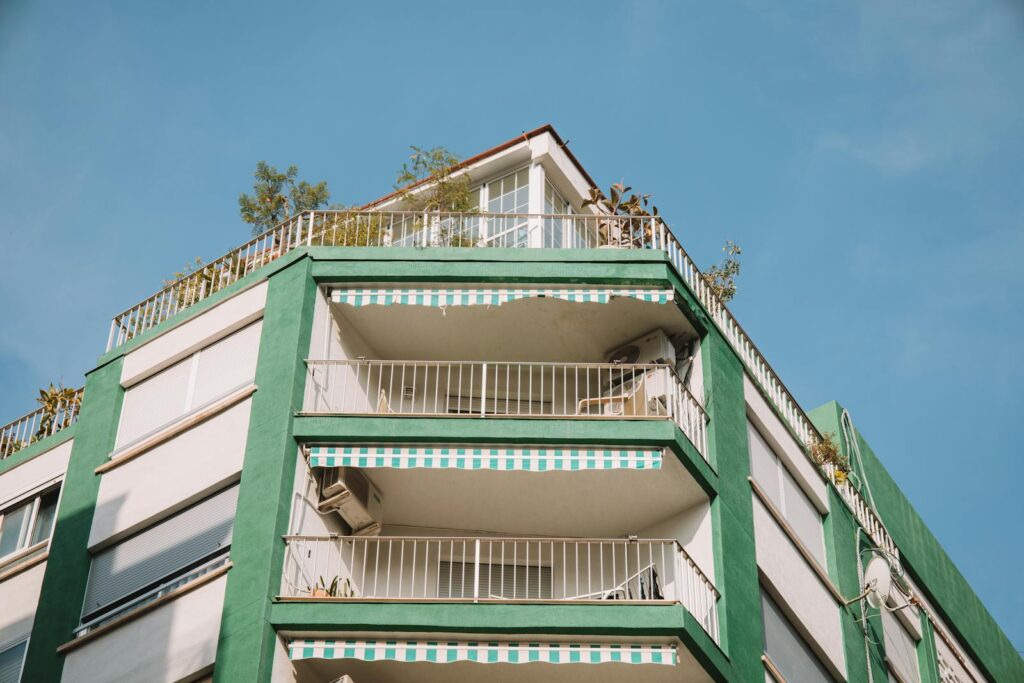


Spain’s 2025 justice reform (Ley Orgánica 1/2025) changed which occupation cases may use fast-track criminal proceedings. It did not introduce a universal 48-hour police-eviction rule or a guaranteed eviction deadline. Here is what property buyers should know about reporting an occupation, legal procedures and protecting a home.
What are "okupas" and why is squatting still a problem in Spain?
The word “okupa” comes from the Spanish verb ocupar (to occupy). It refers to people who illegally break into and take over someone else’s property.
The problem traces back to Spain’s devastating financial crisis of 2008–2014. Over 600,000 mortgage foreclosures left hundreds of thousands of properties abandoned. With banks unable to sell them and families losing their homes, some began moving into empty buildings — and a culture of organised squatting took root.
The crisis is long gone, but the problem persists. In 2024, Spain’s Interior Ministry recorded 16,426 cases of illegal occupation — a 7.4% increase from 15,289 in 2023, and the third-highest annual figure since records began in 2010.
It’s important to understand the distinction between two very different situations:
- Okupas (squatters) — people who break into a property they have no legal right to occupy. This is a criminal offence under Articles 202 and 245 of Spain’s Criminal Code.
- Inquiokupas — tenants who entered legally with a rental contract but then stopped paying rent or refuse to leave after the lease expires. This is a civil matter and much harder to resolve quickly.
Spain’s 2025 anti-squatter law addresses the first group. The second remains subject to slower civil courts.
How organised squatter gangs operate
It’s not just individuals acting alone. Criminal networks have turned squatting into a business. According to reports by the OCCRP and Spanish police, these groups:
- Identify vacant properties — often holiday homes of foreign owners — by monitoring letterboxes, utility meters, and social media (travel posts revealing the owner is abroad)
- Break in and change locks within minutes, sometimes charging others €1,000–€3,000 for “access” to the property
- Present fake rental contracts to police when challenged
- Extort owners, demanding cash payments of €3,000–€10,000 to leave voluntarily
Under the 2025 reform, organised squatting is now treated as a serious criminal offence. Leaders of squatting organisations face up to 8 years in prison under Article 570 bis of the Criminal Code.
Which properties are most at risk?
Not all properties face the same level of risk. Squatters are opportunistic — they target easy prey.
High-risk properties:
- Empty for extended periods (overflowing letterboxes, uncollected mail, no signs of activity)
- No alarm system, CCTV, or building security
- Located in high-density, lower-income neighbourhoods
- Owned by foreigners who visit only a few times a year
Lower-risk properties:
- In gated communities or new-build complexes with concierge and CCTV
- Actively occupied or regularly visited
- In well-maintained neighbourhoods with engaged residents
A word of caution when house-hunting: if you see an apartment priced at €30,000 in a major city, ask yourself why it’s so cheap. The owner may be trying to offload a property in a problem area — or one that’s already been occupied.
Regional risk map (2024 data)
| Region | Cases (2024) | Change vs 2023 | Share of total |
|---|---|---|---|
| Catalonia | 7,009 | +12.0% | 42.7% |
| Andalusia | 2,207 | -5.3% | 13.4% |
| Valencian Community | 1,767 | +7.7% | 10.8% |
| Madrid | 1,451 | -4.3% | 8.8% |
| Canary Islands | 663 | +14.1% | 4.0% |
| Castilla-La Mancha | 538 | -14.9% | 3.3% |
| Balearic Islands | 514 | +26.3% | 3.1% |
| Murcia | 479 | +10.1% | 2.9% |
| Basque Country | 442 | +50.9% | 2.7% |
| Rest of Spain | 3,356 | — | 20.4% |
| Total | 16,426 | +7.4% | 100% |
Source: Ministerio del Interior, Portal Estadístico de Criminalidad, 2024
Barcelona province alone accounted for 5,077 cases — 30.9% of the national total. The Basque Country saw the fastest growth (+50.9%), while Castilla-La Mancha saw the biggest decline (-14.9%).

Spain's anti-squatter law 2025: what changed
Ley Orgánica 1/2025, published in the Official State Gazette (BOE) on 3 January 2025, introduced procedural changes from 3 April 2025.
The Fiscalía General del Estado’s Circular 1/2025 explains the limits: qualifying home-intrusion and violent-usurpation cases may use fast-track proceedings; non-violent occupation under Article 245.2 follows the minor-offence procedure. This does not set a fixed date for recovering possession.
When police can act immediately
The Interior Ministry protocol allows immediate police action where an occupation offence is detected in the act (flagrante delicto). A report made within 48 hours does not by itself establish that condition.
Report an intrusion promptly and preserve ownership records, alarm alerts and witness details. Police and the courts assess the facts and the appropriate procedure. A local representative or trusted neighbour can help report an incident quickly; there is no automatic 48-hour deadline after which an occupier gains a right to stay.
Criminal penalties
The penalties depend on what type of property was occupied:
If someone’s home (primary or secondary residence) — allanamiento de morada, Article 202 of the Criminal Code:
- Without violence: 6 months to 2 years in prison
- With violence or intimidation: 1 to 4 years in prison, plus a fine of 6–12 months
If a vacant or unoccupied property — usurpación, Article 245:
- Without violence: a fine set by the judge based on the offender’s financial situation (daily rate of €2–€400 for 90–180 days — potentially €180 to €72,000)
- With violence: 1 to 2 years in prison (Article 245.1)
Organised squatting networks face additional charges under Articles 557 and 570 bis of the Criminal Code — up to 8 years in prison for leaders, and 2–5 years for active participants.
Note: the 2025 reform did not change these penalty amounts. The reform changes the available procedure for qualifying cases; it does not guarantee when possession will be recovered.
Can you disconnect utilities from squatters?
This is one of the most common questions — and the most misunderstood.
As of April 2026, disconnecting utilities is not explicitly authorised by national law. The anti-squatter law (LO 1/2025) does not include a utility disconnection provision.
However, there are developments:
- In March 2025, Barcelona’s Provincial Court ruled that disconnecting utilities from a squatted property does not constitute coercion — an important precedent.
- In November 2025, the People’s Party (PP) passed a bill through the Senate to decriminalise utility disconnection for squatted properties. It still requires Congressional approval.
Our advice: do not disconnect utilities without consulting a lawyer. The legal landscape is shifting, but acting prematurely could expose you to criminal charges for coercion.
End of the eviction moratorium (February 2026)
Since COVID-19 hit in March 2020, Spain maintained an automatic suspension of evictions for occupants deemed “vulnerable” — typically families with children, elderly people, or those with no alternative housing. This moratorium was extended repeatedly over six years through various Royal Decree-Laws.
On 26 February 2026, Spain’s Parliament rejected the latest extension (Real Decreto-ley 2/2026). The People’s Party (PP), Vox, and Junts per Catalunya voted against it, arguing it encouraged illegal occupation.
What this means for property owners:
- Court-ordered evictions can now proceed without blanket delays based on “vulnerability”
- Previously paused proceedings are resuming across Spain
- Housing advocates warn that 60,000–70,000 vulnerable households may face eviction
Important nuance: Article 441 of the Civil Procedure Act (Ley de Enjuiciamiento Civil) still allows courts to pause evictions briefly — up to 2 months (if the claimant is an individual) or 4 months (if a company) — while social services assess the occupant’s situation. But this is far shorter than the years-long blanket moratorium.
How to protect your property
Before you buy:
- Research the neighbourhood thoroughly. Talk to local residents and building managers. Check if the building has a concierge or security.
- Avoid suspiciously cheap properties — they may come with hidden problems.
- If you plan to live in Spain full-time — on a Non-Lucrative Visa or Digital Nomad Visa — your property is far less likely to be targeted than a holiday home that sits empty most of the year.
After you buy:
- Install an alarm system and CCTV. Specialised “anti-okupa” security services have emerged in Spain, offering 24/7 monitoring, rapid-response locksmith services, and alert systems for unoccupied properties.
- Appoint a local representative who can check on the property regularly and respond to emergencies — especially if you live abroad. Prompt reporting helps police establish what happened.
- Keep property documents with you, not inside the property. If squatters take over, they won’t voluntarily hand back your documents.
- Rent it out properly if you’re not living there. Draw up a formal rental contract. Verify tenants’ solvency with employment contracts and proof of income. Spanish landlords routinely ask for several months’ deposit upfront.
- Register the property as available for sale or rent on listing platforms. This creates a paper trail proving the property was not abandoned.

Anti-okupa insurance: what it costs and what it covers
One of the most practical steps you can take — especially if your property sits empty for part of the year — is specialist squatter insurance. These policies have become widely available in Spain since 2023, and they can save you thousands in legal fees if the worst happens.
| Insurance type | What it covers | Typical cost |
|---|---|---|
| Anti-okupa legal defence Seguro de Defensa Jurídica ante Ocupación | Lawyer fees, court costs, forced eviction expenses. Coverage typically €3,000–€12,000 | €23–€40/year (e.g. DAS/OnlyGal, ARAG, Barón Seguros) |
| Rental non-payment Seguro de Impago de Alquiler | Compensates lost rent if tenants stop paying. Often includes legal eviction costs | 3–5% of annual rent (e.g. €250–€550/year for €700–€1,000/month rent) |
| Add-on to home insurance | Basic legal defence added to existing policy. Lower coverage limits (€3,000–€6,000) | From €7.50/year (Mutua Madrileña) or €10/year (Línea Directa) |
| Home insurance with anti-okupa built in | Full home insurance + anti-okupa legal defence + alternative accommodation + locksmith | From €60–€180/year (e.g. Tuio, Línea Directa, Fidelidade) |
Prices as of early 2026. Vary by provider, property type, and location.
What’s typically covered: all legal fees for eviction proceedings, alternative accommodation while you can’t access your property, utility bills generated by squatters, property damage repairs after eviction, emergency locksmith, and 24/7 telephone legal advice.
Anti-okupa policies (legal defence) don’t cover non-paying tenants — you need a separate Seguro de Impago de Alquiler for that. If you’re renting out the property, get both.
For a UK buyer with a holiday home, the maths is straightforward. An anti-okupa legal defence policy costs €23–€40 per year. A single eviction case will involve total legal costs of €800–€3,000 (lawyer, legal representative, and court fees), plus potential property damage and lost rental income. The insurance pays for itself the moment you need it.
What to do if squatters occupy your property
If you discover a suspected break-in:
- Call the police promptly (112 for emergencies, 091 for National Police, 062 for Guardia Civil).
- Provide ownership documents, alarm records and witness details, and file a police report (denuncia).
- Do not try to enter by force. Ask a lawyer about the appropriate procedure for recovering possession.
Immediate police action depends on the circumstances, including whether the offence is detected in the act. Where judicial proceedings are needed, a lawyer can assess the available route and any application for interim measures. There is no automatic 48-hour cutoff or guaranteed eviction date.
Buying property in Spain?
Our team prepares and checks Spanish residence application files for UK applicants, with post-arrival support available through our service packages. Spanish authorities decide each application.
Buying a squatted property at a discount: is it worth the risk?
A growing trend in Spain involves investors buying properties with squatters at 30–60% below market value. According to Idealista, the number of “properties without possession” on the market grew by 4.6% in a single quarter.
Some investors use the savings to negotiate a cash payment for the squatters to leave voluntarily. Others go through the legal process.
Our advice for UK buyers: this is a strategy for experienced local investors, not for first-time foreign buyers. You’d be taking on a legal battle in a foreign country, in a language you may not speak, with uncertain timelines. The new fast-track process helps, but complications are common — squatters may refuse to identify themselves, present fake contracts, or appeal rulings. If you’re considering this, get specialist legal counsel before signing anything.
Frequently asked questions
Can the police remove squatters immediately in Spain?
Police can act immediately when the legal conditions for an offence detected in the act are met. There is no universal 48-hour cutoff. Report the intrusion promptly; police and the courts assess the circumstances and whether judicial authorisation is needed.
How long does it take to evict squatters in Spain in 2026?
There is no guaranteed eviction period. The procedure depends on the offence and the circumstances; not every occupation case qualifies for fast-track proceedings. Court workload, evidence and any appeal can affect the time needed to recover possession.
What is the difference between "okupas" and "inquiokupas"?
Okupas break into a property without any legal right — this is a criminal offence. Inquiokupas entered legally through a rental contract but then stopped paying rent or refused to leave. The 2025 anti-squatter law only covers okupas. Inquiokupas must be evicted through slower civil proceedings.
Can I cut off water and electricity to squatters in my property?
Not yet under national law. A bill to decriminalise utility disconnection passed Spain’s Senate in November 2025 but still awaits Congressional approval. A March 2025 Barcelona court ruling found that disconnecting utilities does not constitute coercion, but this is a regional precedent. Always consult a lawyer before taking action.
Can squatters claim ownership of my property in Spain?
In theory, Spanish law recognises usucapión (adverse possession) — but only after 30 years of uninterrupted, public occupation without any legal title (or 10 years with a “just title” registered in good faith). In practice, this almost never happens with okupa cases, as court proceedings interrupt the clock. It is not a realistic risk for a monitored property.
Is it safe to buy property in Spain despite the squatter problem?
Yes — for the vast majority of buyers. Only around 0.06% of Spain’s 26 million homes are affected by illegal occupation. The risk is concentrated in specific neighbourhoods of Barcelona, certain parts of Andalusia, and some low-income urban areas. Properties on the Costa del Sol, Costa Blanca, and other popular expat destinations have very low squatting rates, especially in gated communities and new-build developments. The 2025 legal reforms have further strengthened owner protections.
Is squatter insurance worth it in Spain?
If you own a property you don’t live in year-round — absolutely. Anti-okupa legal defence insurance costs as little as €23–€40 per year and covers lawyer fees, court costs, and eviction expenses. If you rent the property out, add a Seguro de Impago de Alquiler (rental non-payment insurance) to protect against tenants who stop paying.
Which areas of Spain have the most squatters?
Catalonia accounts for 42.7% of all reported cases (7,009 in 2024), with Barcelona alone responsible for over 5,000. Andalusia (2,207), the Valencian Community (1,767), and Madrid (1,451) follow. Rural and affluent coastal areas generally have much lower rates.